


Mental Health Is Being Talked About… But Are We Getting It Right?
- Kayla Williams
- Apr 29
- 3 min read

Mental health is finally being talked about out loud. That matters. For a long time, people kept it to themselves. They avoided the labels. They pushed through things they did not understand because it felt safer than being judged for them.
Now, people are speaking up. Asking questions. Getting help. That shift is important.
But something else has started happening at the same time. The language is getting blurred.
When Mental Health Becomes the Punchline
You hear it every day:
“I’m so OCD about my desk being organized.”
“Sorry I forgot, I’m a little ADHD.”
“My girlfriend gets mad easily, she must be bipolar.”
It sounds relatable. It feels harmless.
But this is where the disconnect starts.
These type of phrases describe moments. Not disorders. And when the two get mixed together, something important gets lost.
What These Conditions Actually Feel Like
For people living with these diagnoses, it is not occasional.
It is not quirky.
It is not something you turn off when it is inconvenient. It shows up whether you want it to or not.
ADHD isn’t just being forgetful.
It’s sitting down to do something important and not being able to start, even when you want to.
It’s losing track of time in ways that affect your job, your relationships, your routines.
It’s hyperfocusing so deeply that everything else disappears, then struggling to shift back when you need to.
It’s not about effort. It’s about how the brain regulates attention and action.
OCD isn’t just being particular
It’s the compulsion to do something over and over, a certain way, because your brain won’t settle until you do.
It’s trying to ignore it… and not being able to focus on anything else until it’s done.
It’s checking, repeating, fixing, not because you want to, but because not doing it feels unbearable.
Anxiety isn’t just stress
Stress has a cause.
Anxiety often doesn’t.
It’s your body reacting before your brain can explain why.
Racing heart. Tight chest. Constant mental noise.
It shows up in quiet moments. It follows you into sleep. It turns normal situations into something that feels threatening.
Bipolar disorder isn’t moodiness
Everyone has emotional shifts.
Bipolar disorder is not that.
It’s cycles of intensity. Periods of high energy, fast thoughts, and reduced need for sleep.
Followed by periods where motivation drops, energy disappears, and even basic tasks feel heavy.
It impacts stability.
It impacts decisions.
It impacts daily life in a way that goes far beyond a bad day.
These are not personality traits.
They are patterns that repeat. Interrupt. Exhaust.
And most of the time, they are invisible to everyone else.
Why This Matters More Than People Think
When clinical terms get used casually, the reality behind them gets softened. Watered down. Simplified.
Made to sound manageable in a way that, for many people, it is not. And that has a ripple effect. People who are struggling get taken less seriously. Symptoms get dismissed.
Real conditions start to sound like habits or preferences. It becomes harder to explain what is actually happening when the words no longer carry their full weight.
There’s a Difference Between Feeling Something and Living With It
Everyone feels anxious sometimes.
Everyone gets distracted.
Everyone has habits or preferences.
That is part of being human.
But there is a difference between experiencing a feeling and living with a mental health condition.
One passes. The other stays. Repeats. Requires effort and support to manage. Understanding that difference does not exclude people from the conversation.
It makes the conversation more honest.
Awareness Is Only Half the Work
Talking about mental health is how stigma gets broken. But awareness without accuracy only goes so far. If everything is labeled the same way, the people who need real support get harder to see.
And easier to overlook.
If You’re Struggling, You’re Not Overreacting
If any of this feels familiar in a way that goes beyond the occasional bad day, it is worth paying attention to. Not diagnosing yourself.
Not brushing it off.
Just paying attention.
Because support exists.
And it should not be hard to find.
Start Here
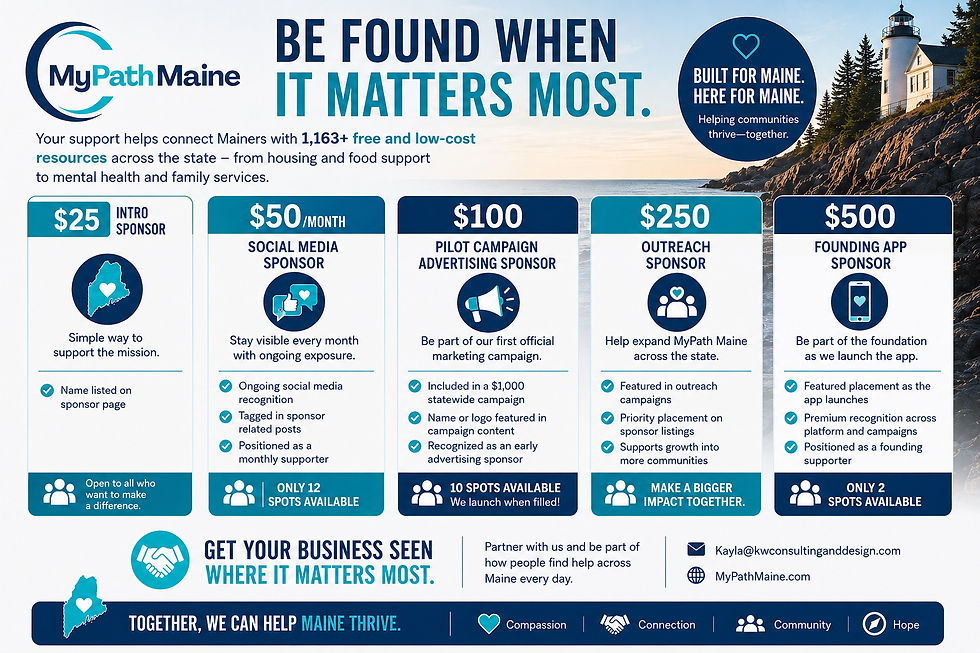
If you or someone you know is trying to figure out what kind of support is actually needed, MyPath Maine was built for that exact reason.
A place to start. A place to find real resources that fit your situation.
👉 Visit MyPathMaine.com
Final Thought
Mental health conversations matter.
But so does getting them right.
Because these conditions are not trends.
They are not quirks.
They are something people carry, manage, and work through every single day.
And they deserve to be understood that way.


Comments